
In the rapidly evolving landscape of artificial intelligence and machine learning, new concepts and tools continuously emerge with the power to reshape industries and unlock new potential. One such emerging term that has caught the attention of both researchers and tech-savvy professionals is Mutmax. While this term might still be unfamiliar to many, it’s proving to be a groundbreaking concept with real-world applications and considerable theoretical depth.
TL;DR
Mutmax is a futuristic concept blending mutual information theory and maximum entropy principles, primarily used in AI and complex systems analysis. It allows machines to make smarter decisions by maximizing learning efficiency and minimizing ambiguities. Real-world uses range from robotics to recommendation systems and even financial forecasting. Though still evolving, Mutmax holds immense promise for the future of intelligent systems.
What is Mutmax?
At its core, Mutmax stands for Mutual Maximum — an approach that incorporates principles from information theory, machine learning, and entropy optimization. It’s a hybrid of two mathematical concepts:
- Mutual Information – Measures the amount of shared information between variables or systems.
- Maximum Entropy – A principle that advocates for making predictions or decisions based on the most uniform distribution possible, given the known constraints.
Together, these ideas create a robust framework for machines to make high-stakes decisions with minimal uncertainty. Mutmax prioritizes extracting the most useful information from data while ensuring the system remains adaptable and general-purpose – a delicate balance that’s at the heart of intelligent computing.
Why Does Mutmax Matter?
The rise of AI has brought with it an explosion in the volume of data. However, more data doesn’t necessarily mean better decisions. Machines often struggle with noisy inputs, ambiguity, and overwhelming complexity. That’s where Mutmax steps in.
By emphasizing informative, high-impact data over sheer volume, Mutmax helps models learn smarter, not harder. It’s about making sure that every piece of the dataset contributes positively to the machine’s understanding and decision-making process.
The Theory Behind Mutmax
Let’s break down the two main theoretical components that fuel the concept:
- Mutual Information (MI)
This concept quantifies how much information one variable contains about another. If a machine learning model is trying to predict future stock prices, MI helps the algorithm identify which variables (like interest rates or commodity prices) provide the most insight. - Maximum Entropy (MaxEnt)
In uncertain situations, MaxEnt tells us to remain unbiased and to assume the most uniform probability distribution. This is especially helpful in early stages of learning when very little is known.
Mutmax combines these to create a model that is curious where it matters but cautious elsewhere. It is a powerful balance between exploration and exploitation — a sweet spot every intelligent system aspires to hit.
How Mutmax Is Used in Practice
Though still a burgeoning field, Mutmax is already showing promise in a variety of real-world domains. Here are some concrete examples of how it’s making a difference:
1. Autonomous Vehicles
Self-driving cars operate in highly dynamic environments where sensors must constantly prioritize important data — like a child running into the street or a sudden roadblock — over irrelevant background information. Mutmax helps these systems make nuanced, timely decisions.

2. Robotics and Embodied AI
In robots that learn via physical interactions with environments — like grasping objects or navigating obstacles — Mutmax drives efficient learning. It ensures the robot spends more time on activities that yield the highest learning returns and avoids wasting energy on inconsequential trials.
3. Financial Modeling
In high-volatility domains like stock trading or portfolio management, algorithms using Mutmax strategies can adapt rapidly to market fluctuations. They prioritize data points that offer insight into future trends while maintaining adaptable confidence levels in predictions.
4. Recommender Systems
From Netflix to Amazon, recommendation engines must understand user preferences and adapt as these evolve. Mutmax frameworks help personalize suggestions based on the most defining aspects of user behavior while filtering out noise.
5. Healthcare Predictive Models
In medical diagnostics, false positives and negatives can be fatal. Mutmax empowers predictive healthcare models to focus on the most medically significant indicators while minimizing variable misinterpretation.
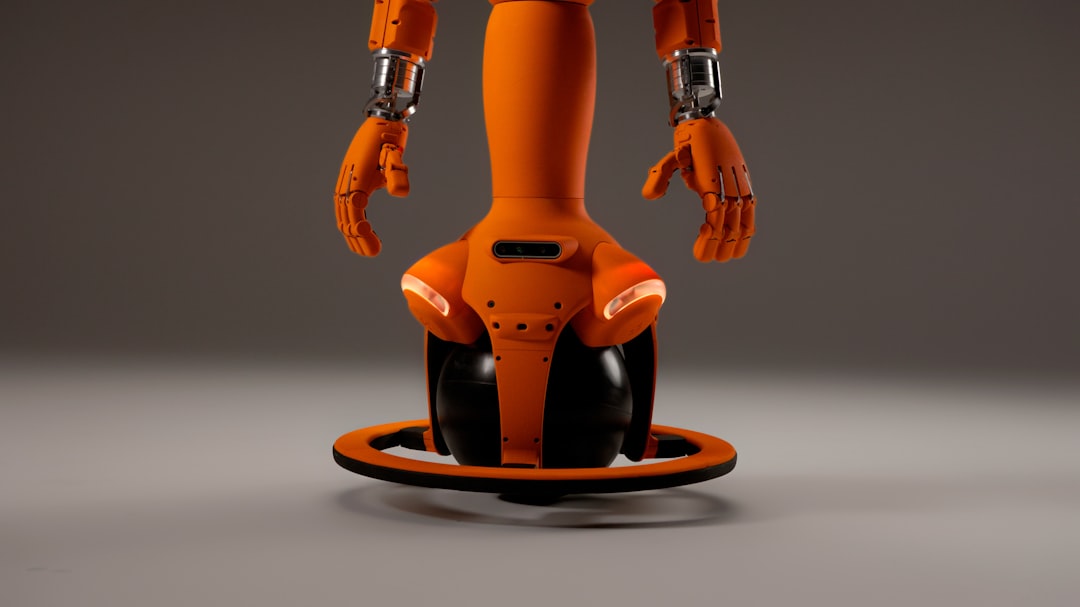
Machines That Use Mutmax
Although Mutmax is not commonly named in commercial technology yet, many research institutions and AI startups are integrating its principles into their newest systems. These include:
- Bayesian Neural Networks: Incorporate uncertainty via entropy and make use of mutual information during training to focus learning on known unknowns.
- Reinforcement Learning Agents: Use an exploration-exploitation trade-off mechanism that closely resembles the balance Mutmax aims to strike.
- Generative AI Models: When models like GPT or DALL·E generate content, they can use Mutmax-inspired tuning to focus on the most informative training prompts.
Challenges and Limitations
No technology is without its caveats, and Mutmax is no exception. Some of the primary challenges include:
- Computational Complexity: Calculating mutual information and entropy in high dimensions can be resource-intensive.
- Data Scarcity: The effectiveness of Mutmax depends on having at least some high-quality data to begin with.
- Interpretability: The mathematical depth of Mutmax can make it hard for developers and stakeholders to understand or trust the system’s internal decisions.
However, these challenges are not insurmountable. Innovations in computing hardware, algorithm design, and explainable AI are steadily mitigating these issues.
Future Outlook: Where Is Mutmax Headed?
As intelligent systems grow more sophisticated, the need for frameworks like Mutmax that balance accuracy, learning speed, and adaptability will only increase. Here’s where Mutmax might be headed next:
- Smart Cities: Informing real-time decisions for traffic control, energy distribution, and emergency response.
- Space Exploration: Enabling autonomous probes and rovers to prioritize meaningful data in unfamiliar terrains.
- Personalized Education Tools: Creating adaptive learning systems that focus on a student’s most critical knowledge gaps.
Research trends suggest that Mutmax will serve as a backbone for next-generation AI developments. It may not always be marketed as “Mutmax,” but its principles are increasingly embedded in modern intelligent systems.
Conclusion
Mutmax is one of those rare concepts that elegantly bridges theory with practical utility. It encapsulates the timeless pursuit of making machines not just smarter, but meaningfully intelligent. Whether it’s guiding autonomous vehicles through chaotic streets or helping doctors detect early signs of illness, Mutmax stands as a beacon for smarter, more informed machines. Its real power lies not just in what it can do today — but in how it can shape the intelligent systems of tomorrow.