
Keyword visibility is one of the most practical ways to understand whether your SEO efforts are producing measurable results. While traffic, conversions, and revenue remain the ultimate business outcomes, visibility shows how often your website appears in search results for the keywords that matter to your audience. In other words, it helps answer a critical question: are you becoming easier to find?
TLDR: Keyword visibility measures how prominent your website is in search engine results for selected keywords. It is not just about ranking number one, but about tracking overall search presence across important terms, pages, and markets. To measure it properly, combine ranking data, search volume, click-through potential, and changes over time. Strong visibility reporting helps you identify SEO progress, detect losses early, and prioritize the work that is most likely to improve business performance.
What Is Keyword Visibility?
Keyword visibility is a metric that estimates how visible a website is in search engine results for a defined set of keywords. It usually takes into account where your pages rank, how often those keywords are searched, and how likely users are to click on your result based on its position.
For example, ranking in position 2 for a keyword with 20,000 monthly searches contributes more visibility than ranking in position 18 for a keyword with 200 searches. A visibility score helps turn hundreds or thousands of individual keyword rankings into a more useful performance indicator.
Unlike a simple ranking report, keyword visibility provides a broader view. Rankings show where you appear for individual terms. Visibility shows how strong your overall search presence is across a keyword portfolio.

Why Keyword Visibility Matters for SEO Performance
SEO performance is often judged by organic traffic alone. Organic traffic is important, but it can be influenced by seasonality, brand awareness, algorithm updates, demand changes, and even offline marketing. Keyword visibility adds context by showing whether your site is gaining or losing ground in the search results before those changes fully appear in traffic reports.
Tracking visibility is especially valuable because it helps you:
- Measure progress across many keywords: A single ranking improvement may not mean much, but broad visibility growth usually signals stronger SEO health.
- Detect problems early: Drops in visibility can reveal technical issues, content decay, or competitors gaining ground.
- Prioritize SEO actions: Keywords ranking just outside the top positions may offer faster opportunities than terms buried on page five.
- Connect SEO to business goals: Visibility can be segmented by product category, location, funnel stage, or revenue potential.
How Keyword Visibility Is Commonly Calculated
Different SEO tools use slightly different formulas, but most visibility calculations are based on three core elements: ranking position, search volume, and estimated click-through rate.
A simplified version of the process looks like this:
- Choose a set of keywords to track.
- Record your website’s ranking position for each keyword.
- Estimate the click-through rate for each position.
- Multiply the keyword’s search volume by the estimated click-through rate.
- Add the results together to create an overall visibility estimate.
For instance, if a keyword receives 10,000 monthly searches and your position is expected to earn a 10% click-through rate, that keyword may represent roughly 1,000 potential visits. When this calculation is repeated across your keyword set, you get a clearer view of your total search opportunity.
It is important to treat visibility scores as directional metrics, not exact traffic predictions. Search results vary by location, device, personalization, featured snippets, ads, and other SERP features. The real value is in tracking changes over time using a consistent method.
Choosing the Right Keywords to Track
Your keyword visibility report is only as useful as the keywords behind it. Tracking a random list of broad phrases can produce misleading conclusions. A serious SEO measurement process begins with a carefully selected keyword set.
Include keywords that reflect:
- Commercial value: Terms that indicate purchase intent, lead generation potential, or service demand.
- Informational demand: Questions and research queries that attract users earlier in the buying journey.
- Brand and non-brand visibility: Brand terms show demand for your business, while non-brand terms show your ability to reach new audiences.
- Product or service categories: Track visibility by business segment so reporting is more actionable.
- Local or regional relevance: For location-based businesses, rankings should be monitored in the markets that actually matter.
A balanced keyword set should include head terms, mid-tail terms, and long-tail phrases. Head terms often have high search volume but intense competition. Long-tail keywords may have lower volume, but they can be more specific, less competitive, and more likely to convert.
Key Metrics to Use Alongside Visibility
Keyword visibility should not be reviewed in isolation. A rising visibility score is encouraging, but it does not automatically mean your SEO program is successful. To measure performance responsibly, combine visibility with other reliable metrics.
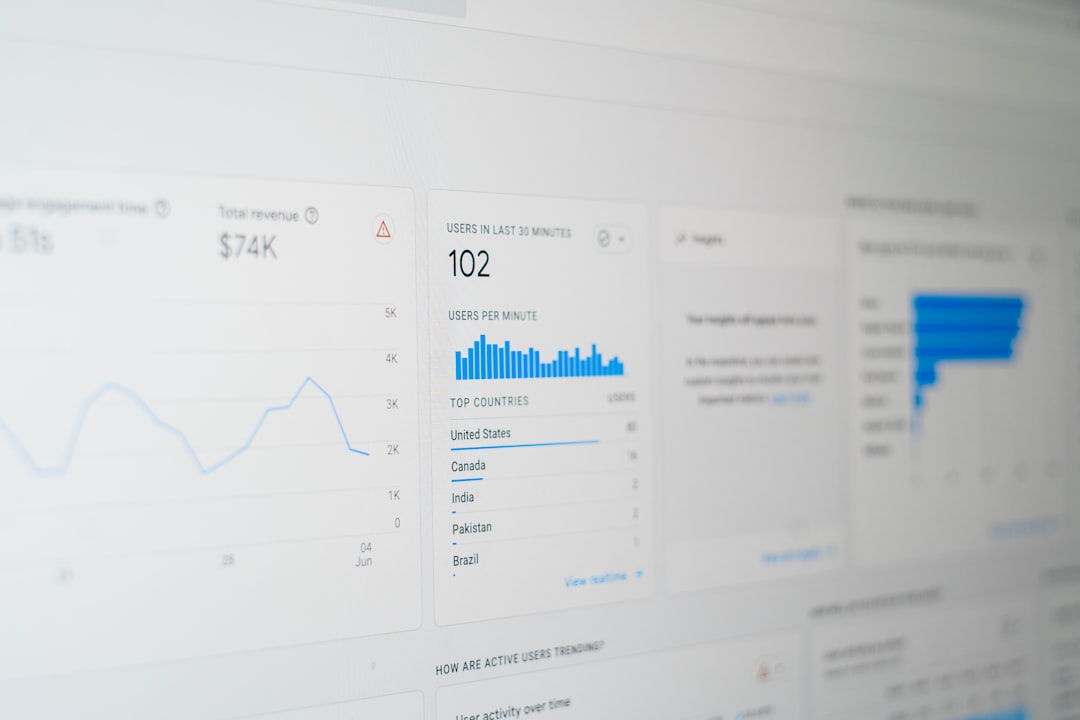
- Organic traffic: Confirms whether improved visibility is translating into more visits.
- Organic conversions: Shows whether SEO traffic is producing leads, sales, signups, or other meaningful actions.
- Click-through rate: Helps evaluate whether titles, meta descriptions, and SERP appearance are attracting clicks.
- Impressions: Available in search performance platforms, impressions show how often your pages are seen in results.
- Average position: Useful for keyword-level diagnosis, although less comprehensive than visibility.
- Share of voice: Compares your visibility against competitors for the same keyword set.
Together, these metrics provide a more complete picture. For example, if visibility rises but traffic does not, you may be improving for low-click SERPs or keywords with limited demand. If traffic rises but conversions do not, the issue may be search intent, landing page quality, or offer alignment.
Segmenting Visibility for Better Insights
One of the most effective ways to make keyword visibility useful is to segment it. A single sitewide number may be easy to report, but it can hide important details. Serious SEO teams break visibility down into meaningful groups.
Common visibility segments include:
- By keyword intent: Informational, navigational, commercial, and transactional keywords.
- By page type: Blog posts, product pages, category pages, landing pages, and resource pages.
- By business category: Different services, products, or departments.
- By geography: Countries, regions, cities, or service areas.
- By device: Desktop and mobile rankings can differ significantly.
This level of analysis makes reporting more useful for decision-making. If visibility is improving for informational keywords but declining for commercial keywords, the SEO strategy may need to shift toward pages that support revenue more directly.
How Often Should You Measure Keyword Visibility?
For most websites, weekly tracking is sufficient for operational analysis, while monthly reporting is better for strategic evaluation. Daily ranking changes can be noisy and may lead to overreaction. Search results naturally fluctuate, and not every movement requires action.
A monthly visibility review should focus on trends, not isolated changes. Look for sustained improvements or declines across keyword groups. Compare performance against content updates, technical fixes, link acquisition, site migrations, or algorithm updates. The goal is to understand what changed and why.
For highly competitive industries, large ecommerce sites, or businesses undergoing major SEO projects, more frequent monitoring may be appropriate. In those cases, visibility tracking can help identify urgent issues such as indexing problems, ranking losses after site changes, or competitor movement.
Common Mistakes When Measuring Visibility
Keyword visibility can be misleading if it is measured poorly. Avoid these common mistakes:
- Tracking too few keywords: A small sample can exaggerate wins or losses.
- Ignoring search intent: Ranking for irrelevant keywords does not create meaningful performance.
- Mixing brand and non-brand data without context: Brand visibility often behaves differently from non-brand visibility.
- Focusing only on position one: Improvements from position 15 to position 6 can represent important progress.
- Changing keyword sets too often: Frequent changes make long-term comparisons unreliable.
Consistency is essential. Use the same tracking method, keyword groups, location settings, and reporting cadence whenever possible. If you update your keyword set, document the change so future comparisons remain credible.
Turning Visibility Data Into SEO Action
Measurement is only valuable if it leads to better decisions. Once you identify visibility patterns, translate them into specific actions. Keywords ranking in positions 4 to 15 may benefit from content improvements, stronger internal links, better title tags, or updated information. Pages losing visibility may need technical review, content refreshes, or competitive analysis.
For keywords with high impressions but low click-through rates, improve the search snippet. A clearer title, stronger value proposition, or more relevant meta description can increase traffic without changing rankings. For pages that rank well but do not convert, review page intent, calls to action, layout, and trust signals.
Keyword visibility is not the final goal of SEO, but it is a disciplined way to measure whether your search presence is strengthening. When combined with traffic, conversion, and revenue data, it becomes a reliable performance indicator that supports smarter SEO planning. The most successful teams use visibility not as a vanity metric, but as an early signal, a diagnostic tool, and a guide for continuous improvement.