


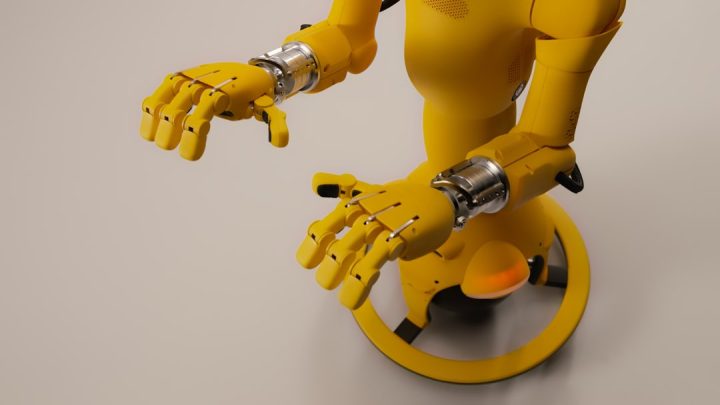
Robotics simulation platforms have become an essential component of modern robotics development, enabling engineers, researchers, and educators to design, test, and optimize robotic systems in virtual environments before deploying them in the real world. Platforms such as Webots provide realistic physics engines, sensor modeling, and programmable robots that significantly reduce development time and cost. As robotics systems grow more complex and safety-critical, simulation environments are no longer optional—they are foundational tools for responsible innovation.
TLDR: Robotics simulation platforms like Webots allow developers to test robots in realistic virtual environments before deploying physical systems. They reduce costs, accelerate development cycles, and improve safety by identifying issues early. With accurate physics, sensor models, and scripting tools, simulations closely mirror real-world conditions. These platforms are now central to research, industrial automation, and education.
The increasing adoption of robotics across industries—from manufacturing and logistics to healthcare and autonomous vehicles—has raised expectations for reliability and safety. Physical prototyping alone cannot meet the demands of rapid iteration and risk mitigation. Virtual testing environments offer a controlled and measurable framework where algorithms, mechanical structures, and communication systems can be evaluated under diverse scenarios without the expense or hazard of real-world trials.
The Role of Simulation in Modern Robotics
Simulation platforms serve as digital laboratories. They allow developers to model robot kinematics, simulate sensor feedback, and evaluate control systems in dynamic settings. This digital-first approach fundamentally shifts how robotics systems are engineered.
Key roles of simulation platforms include:
- Risk Reduction: Testing potentially dangerous behaviors in a safe virtual environment.
- Cost Efficiency: Minimizing the need for repeated hardware prototyping.
- Rapid Iteration: Adjusting algorithms and parameters instantly without rebuilding components.
- Scalability: Simulating multi-robot systems and large environments without physical infrastructure.
- Reproducibility: Re-running experiments under identical conditions for validation.
For applications such as autonomous navigation or robotic surgery, simulation platforms provide a critical testing ground where edge cases and rare events can be modeled deliberately and extensively.
Understanding Webots and Its Capabilities
Webots is one of the most established open-source robotics simulation platforms. It supports a wide range of robot models, programming languages, and physical environments. Its architecture allows users to build custom robots or import detailed models designed in standard CAD systems.
Core features of Webots include:
- High-Fidelity Physics Engine: Realistic simulation of forces, collisions, and joint dynamics.
- Sensor Emulation: Cameras, lidar, GPS, IMU, and other sensors accurately modeled.
- Multi-Language Support: Integration with Python, C, C++, Java, and ROS.
- Cross-Platform Availability: Compatible with multiple operating systems.
- Open-Source Ecosystem: Community-supported enhancements and shared models.
These features allow Webots to bridge the gap between theoretical algorithm design and practical deployment. Developers can prototype autonomous behaviors, then transfer the same control code to physical robots with minimal modification.

Realistic Physics and Sensor Modeling
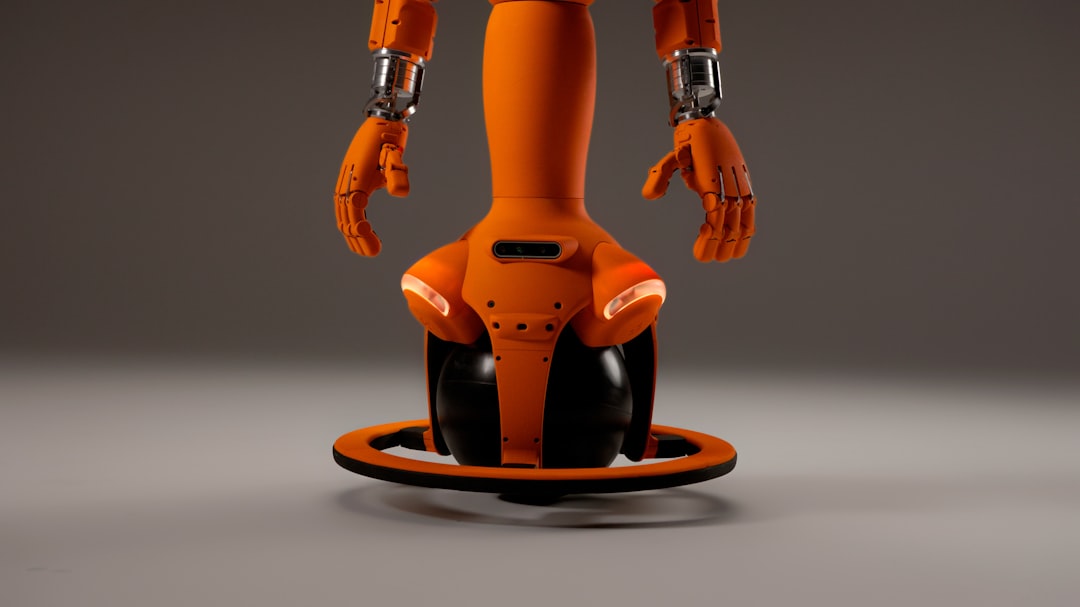
The credibility of any robotics simulation platform depends on the accuracy of its physical modeling. Webots and similar platforms implement detailed physics engines capable of simulating:
- Gravity and inertia
- Rigid body dynamics
- Friction and surface interaction
- Joint constraints and actuator limits
Accurate sensor modeling is equally critical. Autonomous robots rely on sensor data to make decisions. If simulation data diverges significantly from real-world behavior, algorithm performance may degrade during deployment. Modern platforms emulate camera distortion, lidar noise, latency, and sampling frequency to reflect operational realities.
This combination ensures that robotics simulations move beyond simplistic animations into scientifically valid testing environments. For research institutions and engineering teams, this reliability establishes trust in virtual results.
Applications Across Industries
Robotics simulation platforms are not confined to academic environments. Their practical utility spans multiple sectors:
1. Industrial Automation
Manufacturing robots can be programmed and tested in simulated assembly lines before installation. This reduces downtime and prevents costly integration errors.
2. Autonomous Vehicles and Mobile Robots
Navigation algorithms, obstacle avoidance systems, and mapping strategies can be evaluated across thousands of virtual scenarios. Rare weather events, unexpected obstacles, or complex traffic patterns can be simulated repeatedly.
3. Healthcare Robotics
Surgical robots and rehabilitation systems demand precise and predictable operation. Simulation ensures that mechanical movements and control responses meet stringent safety standards.
4. Swarm Robotics
Testing coordinated behavior of multiple robots is logistically challenging in physical settings. Simulation allows hundreds of agents to interact in a shared digital environment.
Image not found in postmetaIntegration with ROS and AI Frameworks
Modern robotics development is closely tied to the Robot Operating System (ROS). Platforms like Webots offer ROS integration, enabling seamless communication between simulation and real robotic frameworks. This interoperability allows developers to:
- Deploy identical control nodes in both simulated and physical environments.
- Test AI models trained on synthetic data.
- Stream simulated sensor data into machine learning pipelines.
The integration with artificial intelligence tools is particularly significant. Machine learning-driven robotics systems require large datasets, often expensive and time-consuming to collect. Simulation platforms provide controlled environments for generating annotated synthetic data at scale. This capability accelerates model training while maintaining experimental control.
Advantages Over Physical-Only Testing
While physical testing remains indispensable, relying exclusively on hardware-based experiments limits development speed and safety. Compared to a physical-first approach, simulation offers:
- Lower Initial Investment: No immediate requirement for multiple hardware prototypes.
- Faster Debugging: Real-time monitoring and code tracing within virtual systems.
- Scenario Diversity: Ability to simulate extreme or rare conditions without risk.
- Parallel Testing: Running multiple simulations simultaneously.
These advantages contribute to shorter innovation cycles and improved reliability. Particularly in startups and research labs with limited budgets, simulation becomes a strategic enabler.
Educational and Research Value
Beyond industry applications, robotics simulation platforms are widely adopted in education. Students can design, program, and test robots without access to expensive laboratory hardware. Webots offers pre-built robot models and example environments, making it accessible while remaining technically robust.
For research purposes, simulation supports:
- Experimental reproducibility
- Controlled benchmarking of algorithms
- Comparative studies between control frameworks
- Safe exploration of experimental designs
By standardizing virtual testing conditions, researchers can publish findings with greater methodological transparency and validity.
Image not found in postmetaLimitations and Considerations
Despite their sophistication, simulation platforms cannot perfectly replicate reality. Known challenges include:
- Reality Gap: Differences between simulated physics and real-world interactions.
- Computational Constraints: High-fidelity simulations may require significant processing resources.
- Simplified Environmental Complexity: Some nuanced environmental variables remain difficult to model.
The “reality gap” is a recognized issue in robotics. Developers must validate simulated performance with physical testing before final deployment. However, well-calibrated simulation substantially reduces uncertainty and enhances final-stage testing efficiency.
The Future of Robotics Simulation
As computing power increases and digital twin concepts mature, robotics simulation platforms will become even more realistic and interconnected. Emerging trends include:
- Cloud-Based Simulation Environments: Collaborative experiments across global teams.
- Photorealistic Rendering: Enhanced visual modeling for computer vision training.
- Real-Time Hardware Synchronization: Continuous feedback loops between physical robots and digital twins.
- Improved AI Integration: Automated scenario generation and adaptive testing.
These developments reinforce simulation’s position as a central pillar in robotics engineering workflows. Rather than replacing physical testing, advanced simulation augments human oversight and precision engineering.
Conclusion
Robotics simulation platforms like Webots represent a cornerstone of contemporary robotics development. By combining realistic physics modeling, accurate sensor emulation, and flexible integration with AI and ROS frameworks, they offer a powerful environment for testing and validation. Their ability to reduce costs, increase safety, and accelerate iteration makes them indispensable across industry, research, and education.
As robotics technologies continue to expand into safety-critical and highly autonomous domains, trust in system performance becomes paramount. Simulation platforms provide the structured, repeatable, and scientifically grounded environment necessary to build that trust. In today’s engineering landscape, virtual testing is not a convenience—it is a strategic necessity.