


Artificial intelligence has evolved dramatically in recent years, with image generation emerging as one of its most fascinating and groundbreaking applications. Among the key players driving innovation in this domain is Revio AI, a platform known for its advanced image generation models. Leveraging state-of-the-art machine learning algorithms, Revio AI offers powerful capabilities for creating realistic, high-resolution, and context-aware images that push the boundaries of what artificial creativity can achieve.
TL;DR: Revio AI is an advanced artificial intelligence platform specializing in image generation. It uses sophisticated models to create high-quality, realistic images from text prompts or other data inputs. Known for its versatility, Revio AI is making a significant impact in industries such as advertising, gaming, and product design. Its commitment to ethical AI development and transparency further enhances its credibility and reliability.
Understanding Revio AI
Revio AI is a cutting-edge platform that uses deep learning techniques to generate images that are not just visually appealing but also semantically accurate. Unlike traditional computer-generated graphics, Revio’s images appear organic, textured, and contextually relevant. This is achieved by training neural networks on vast datasets encompassing a broad range of visual concepts.
The core of Revio’s technology lies in transformer-based architectures, particularly variants of diffusion models and GANs (Generative Adversarial Networks). These models break down the image generation process into a series of gradual refinements, resulting in a final output that is both detailed and authentic-looking.

How Revio AI Image Generation Works
While the surface functionality of Revio AI might appear simple—enter a prompt, receive an image—the underlying technology is anything but. Revio employs a multi-step process:
- Input Interpretation: The model analyzes the user’s prompt or dataset, identifying the core elements and stylistic textures required.
- Latent Space Mapping: Using encoder-decoder mechanisms, the system navigates a “latent space” where visual ideas are represented mathematically.
- Image Synthesis: The neural network generates an initial low-resolution image, then refines it iteratively with the help of diffusion processes, achieving photorealistic details over multiple passes.
This meticulous approach has enabled Revio AI to outperform many competitors in terms of image clarity, coherence, and creative alignment with the provided input.
Key Features of Revio AI Image Models
Revio AI offers a feature-rich environment tailored to both casual creators and professional users. Some of its highlights include:
- Text-to-Image Conversion: Allows detailed image generation from natural language descriptions.
- Style Transfer Capabilities: Users can apply specific artistic styles—such as surrealism, photorealism, or noir—to their image outputs.
- Multi-Modal Learning: Supports inputs from various domains including sketches, audio signals, and structured data, enhancing creative versatility.
- High Definition Resolution: Images can be rendered up to 8K, suitable for professional media use.
- Custom Model Training: Offers users the ability to fine-tune models on proprietary data sets for project-specific utility.
Applications Across Industries
The impact of Revio AI is far-reaching and evident across multiple sectors. Here are a few areas where its image generation capabilities are particularly transformative:
1. Advertising and Marketing
Brands use Revio AI to quickly prototype and visualize campaign assets, generating everything from product mockups to concept art. The fast turnaround reduces design costs and increases creative agility.
2. Video Game Development
In gaming, having the ability to generate environment designs, character concepts, or object textures rapidly accelerates development timelines. Revio AI assists artists in fleshing out richly detailed worlds from simple sketches or descriptions.
3. E-commerce and Product Design
Retailers can use the platform to produce accurate visual representations of products before they are manufactured. This helps in digital marketing, A/B testing, and customer engagement.

4. Education and Research
Academics and educators use Revio for visualizing abstract ideas or loss-context historical reconstructions. For instance, an archaeology professor could use Revio’s tools to simulate ancient temple ruins based on a textual description.
Ethics and Transparency
As the deployment of AI in creative industries raises ethical questions around ownership, authenticity, and bias, Revio AI has proactively taken measures to ensure responsible use. These include:
- Watermarking Algorithms: Embedding invisible watermarks for verifying AI-generated content.
- Bias Reduction Protocols: Applying checks to minimize racial, gender, and cultural bias in generated visuals.
- User Privacy Safeguards: Ensuring data uploaded for model training remains confidential and encrypted.
By maintaining these high ethical standards, Revio enhances its trustworthiness and assures users that their interaction with the platform will be both safe and transparent.
Comparison with Other Image Models
The AI-based image generation landscape is crowded with high-profile names such as OpenAI’s DALL·E, Stability AI’s Stable Diffusion, and Midjourney. However, Revio AI holds its ground due to some standout attributes:
- Customizability: Unlike some models that are closed-box systems, Revio allows more extensive user training and dataset integration.
- Scalability: The infrastructure can support enterprise-level demands, making it suitable for large corporations and creative agencies alike.
- Enhanced Semantics: Revio excels at capturing the fine nuances of user inputs, which leads to more contextually accurate outputs.
These features make Revio a compelling alternative for organizations seeking more control and higher fidelity in AI art generation.
Challenges and Limitations
Despite its impressive capabilities, Revio AI is not without limitations. Some of the most persistent challenges include:
- Computational Costs: Generating high-resolution images requires significant GPU resources, which may limit access for smaller users.
- Legal and Copyright Concerns: As with all AI-generated content, the legal framework surrounding image ownership remains ambiguous.
- Training Data Saturation: As more models train on similar datasets, the uniqueness and variance in outputs can degrade over time.
Revio is aware of these issues and is actively investing in research and partnerships to address and overcome these concerns moving forward.
Future Prospects
The long-term vision for Revio AI extends beyond simple image generation. Future rollouts are expected to include:
- 3D Model Synthesis: Enabling the prompt-based generation of 3D assets for use in AR/VR applications.
- Temporal Generation: Introducing image sequences over time (essentially video) based on historical or predictive models.
- Voice-to-Image Interfaces: Allowing users to describe scenes verbally and receive visual outputs in real time.

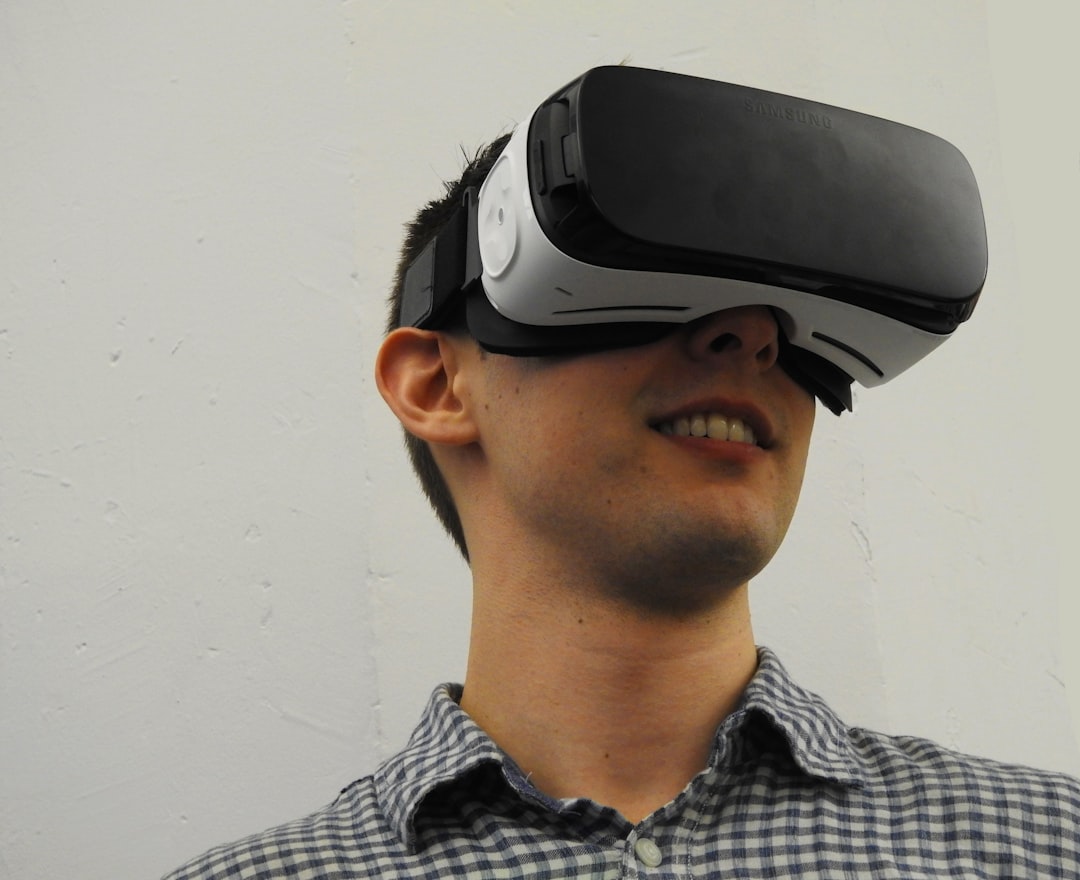
These advancements will not only broaden Revio’s utility but also solidify its position as a frontrunner in the integration of language, vision, and spatial understanding.
Conclusion
Revio AI stands as a testament to the power and promise of artificial intelligence in the creative arts. By combining cutting-edge technology with a user-centered and ethical philosophy, it is shaping the future of visual media. Whether you’re a solo creator, part of a design agency, or an R&D lab, Revio AI offers tools that are both powerful and responsible. As the digital landscape continues to evolve, platforms like Revio will play an increasingly central role in how we visualize, simulate, and create the world around us.